Having a clear food list makes gestational diabetes management much easier. This comprehensive guide organizes foods by category, so you can organize meal and shopping choices alongside the eating plan from your care team.
Save this page or print it for easy reference when grocery shopping or planning meals.
Vegetables, Protein Foods and Other Meal Ingredients
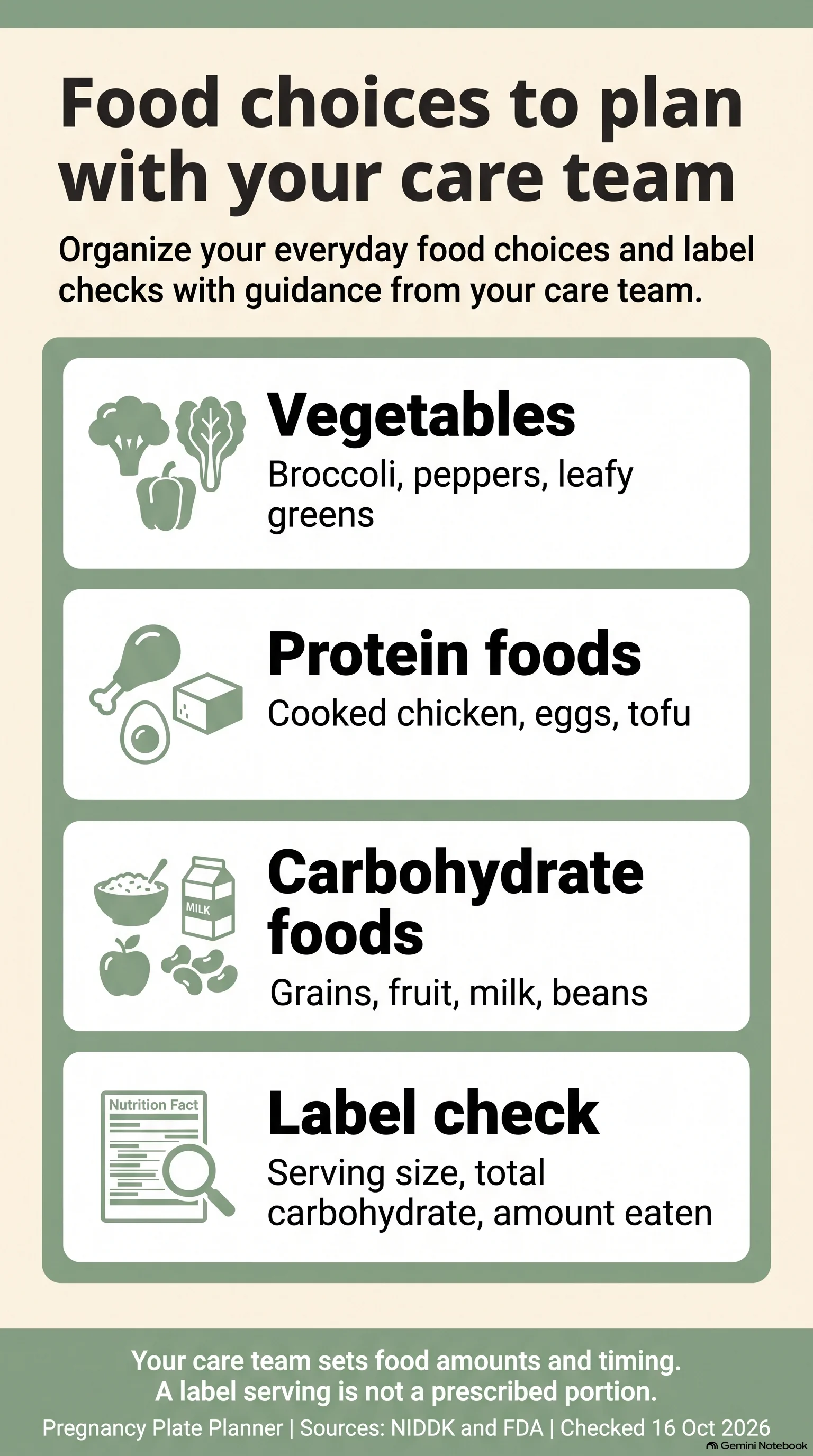
These are food examples, not unlimited or zero-carbohydrate categories. Amounts, preparation and the rest of your meal matter. Your care team can help choose foods and portions.
Non-Starchy Vegetables
- Leafy greens: spinach, kale, lettuce, arugula, Swiss chard
- Broccoli and cauliflower
- Bell peppers (all colors)
- Cucumbers
- Zucchini and summer squash
- Asparagus
- Green beans
- Celery
- Mushrooms
- Tomatoes
- Cabbage
- Brussels sprouts
- Onions and garlic
- Eggplant
- Snap peas and snow peas
Proteins (Choose lean options)
- Poultry: Chicken breast, turkey, ground chicken/turkey
- Fish: Salmon, cod, tilapia, shrimp, tuna (limit albacore)
- Eggs: Whole eggs, egg whites
- Beef: Lean cuts, sirloin, ground beef (90% lean+)
- Pork: Tenderloin, lean cuts
- Plant proteins: Tofu, tempeh, edamame
Healthy Fats
- Avocado and guacamole
- Olive oil and avocado oil
- Nuts: almonds, walnuts, pecans, macadamia
- Seeds: chia, flax, pumpkin, sunflower
- Nut butters (no sugar added)
- Cheese made with pasteurized milk; follow pregnancy food-safety guidance
- Butter and ghee
Condiments and Seasonings
- Mustard
- Hot sauce
- Vinegar
- Herbs and spices (all)
- Salsa (check for added sugar)
- Sugar-free dressings
- Soy sauce and coconut aminos
- Lemon and lime juice
Carbohydrate Foods to Include in Your Plan
Fruit, grains, starches, milk, yogurt and legumes can contribute carbohydrate. Use the product label or the food-counting resource your dietitian recommends, rather than assuming every food below has the same carbohydrate amount.
Fruit Choices
- Berries (strawberries, blueberries, raspberries)
- Cherries
- Grapefruit
- Apple
- Pear
- Orange
- Peach/nectarine
- Plum
Check the actual food, preparation and amount eaten. The label serving size is a reference amount, not your prescribed portion.
Grains and Starches (Measure carefully)
- Quinoa (cooked)
- Brown rice (cooked)
- Oatmeal (cooked)
- Whole wheat bread
- Whole wheat tortilla (small)
- Corn tortilla
- Sweet potato
Check the actual food, preparation and amount eaten. The label serving size is a reference amount, not your prescribed portion.
Dairy
- Greek yogurt (plain)
- Milk
- Cottage cheese
- Cheese (hard)
Check the actual food, preparation and amount eaten. The label serving size is a reference amount, not your prescribed portion.
Legumes
- Black beans
- Lentils
- Chickpeas
- Hummus
Check the actual food, preparation and amount eaten. The label serving size is a reference amount, not your prescribed portion.
Foods and Drinks to Review When Planning
The NHS recommends avoiding sugary drinks and choosing alternatives to sugary snacks. A completely sugar-free diet is not required, and this list is not a prediction of an individual glucose result. Check ingredients, labels and portions with your care team.
Sugary Drinks: Check Alternatives and Labels
- Regular soda
- Fruit juice (even 100%)
- Sweet tea
- Lemonade
- Sports drinks
- Energy drinks
- Sweetened coffee drinks
- Smoothies from shops (usually high sugar)
Sweets and Desserts: Discuss Portions and Alternatives
- Candy
- Cookies, cakes, pastries
- Ice cream (regular)
- Donuts
- Chocolate (except small amounts of dark 70%+)
- Honey, maple syrup, agave
- Jelly and jam (regular)
Refined Grains: Compare Wholegrain Alternatives
- White bread
- White rice
- Regular pasta
- Bagels
- Croissants and pastries
- Most crackers
- Pretzels
- Breakfast cereals (most)
Fruit Forms and Portions to Discuss
- Bananas (especially ripe)
- Mangoes
- Pineapple
- Grapes (large portions)
- Watermelon
- Dried fruit (all types)
Other Foods to Limit
- Fried foods
- Fast food
- Processed snacks
- Chips and crackers
- Flavored yogurts (high sugar)
- Sweetened oatmeal packets
- Granola (usually high sugar)
- Most protein bars (check labels)
Choosing Drinks
Water is a straightforward shopping option. For milk, plant-based drinks and other packaged beverages, check serving size, total carbohydrate and added sugars. A no-added-sugar claim does not mean zero carbohydrate. Ask your care team about caffeine, herbal products and pregnancy-specific drink restrictions.
Printable Grocery List by Section
Produce Section:
- Salad greens and spinach
- Broccoli and cauliflower
- Bell peppers
- Cucumbers
- Zucchini
- Tomatoes
- Onions
- Garlic
- Avocados
- Berries
- Lemons and limes
- Apples (small)
Meat/Protein Section:
- Chicken breasts/thighs
- Salmon or other fish
- Eggs
- Lean ground beef or turkey
- Pork tenderloin
- Shrimp
Dairy Section:
- Greek yogurt (plain, full-fat)
- Cheese (various)
- Cottage cheese
- Butter
- Heavy cream (for coffee)
Pantry Items:
- Olive oil
- Nuts (almonds, walnuts)
- Nut butter (no sugar added)
- Canned beans (black, chickpeas)
- Quinoa
- Whole grain bread (check labels)
- Low-carb tortillas
- Salsa
- Mustard
Quick Reference: Reading a Food Label
- Find the label serving size and servings per container.
- Find total carbohydrate for that serving, rather than looking only at sugars.
- Account for the amount you actually eat using the method your care team taught you.
The FDA explains that serving size describes an amount typically consumed; it is not a recommendation of how much to eat. Food labels and formats differ by country. Your care team sets your individual food amounts and monitoring plan.
Watch: Flexible Grocery Planning
This Pregnancy Plate Planner video explains varied grocery choices and why a care-team eating plan matters. It does not prescribe carbohydrate grams or guarantee glucose outcomes. Use it alongside the food categories and label-reading steps above.
Watch on YouTube with captions. Loading or playing this video connects to YouTube. The food examples and written guidance remain available without playing it.
Related Articles
- Foods to Avoid with GD – More detail on what to skip
- Failed Your Glucose Test? – What your GD diagnosis means and what comes next
- 50 Best GD Snacks – Snack ideas with carb counts
- Best Fruits for GD – Detailed fruit guide
- 20 GD Breakfast Ideas – Meal planning help
- 30 GD Dinner Ideas – Dinner inspiration
Want help organizing meals and a shopping list? Explore the meal-plan quiz for planning support. It does not replace care-team advice or treatment.